Quotes still go out by email or phone
Custom business systems
Your workflow has outgrown the tools holding it together.
I build internal systems, client portals, estimator tools, and workflow automation for service companies that need software built around real operations — not templates.
Custom-coded systemsDirect builder accessArchitecture-firstProduction delivery
Buyer Pain
The business is growing. The back-office has not kept up.
Most clients reach out when revenue is moving in the right direction, but the operational layer is still held together by workarounds.
Staff re-enter the same information in multiple places
Job tracking lives in a spreadsheet nobody trusts
The contact form does not collect enough to qualify a lead
Reporting requires someone to manually pull and compile
Administrative work grows every time you add a client
The problem is usually not the website. It is the system behind the business.
Buyer Fit
Is this the right fit?
Best Fit
- Service companies managing jobs, clients, or field work
- Agencies needing internal tools or client portals
- Teams relying on spreadsheets for operations
- Businesses that need estimator tools, intake flows, or dashboards
- Companies that want their site connected to real workflow
Usually Not a Fit
- Single-page brochure sites or design-only requests
- Very small projects where a template solves the problem
- Projects that do not require custom logic, data, or workflow
The focus is on projects where the software is part of how the business runs, not a standalone marketing page disconnected from operations.
Services Preview
Four offers, each built around a different operational problem.
Internal Systems
Custom Business Systems
Problem
When operations are managed through spreadsheets, inboxes, and manual coordination, the team needs a real system, not another workaround.
What I build
- Internal dashboards
- Job and client tracking
- Admin tools and reporting
- Workflow platforms
Client-Facing Tools
Client Portals & Estimator Tools
Problem
When a contact form is not giving your team enough information to quote, qualify, or move quickly, the intake path needs to do more work.
What I build
- Guided estimator flows
- Intake and booking systems
- Client dashboards
- Lead qualification tools
SaaS MVPs
SaaS MVP Development
Problem
When a product idea or service workflow needs a focused first version, the MVP should prove the core workflow before becoming a full platform.
What I build
- React TypeScript MVPs
- User and admin workflows
- Product dashboards
- Launch-ready first releases
Workflow Automation
Automation & Integrations
Problem
When the tools exist but the movement between them is still manual, automation can reduce repeated handling and missed follow-up.
What I build
- CRM and email integrations
- Automated notifications and reports
- Data sync and pipeline tools
- Repetitive admin workflow automation
Featured Case Studies
Projects built around operational bottlenecks.
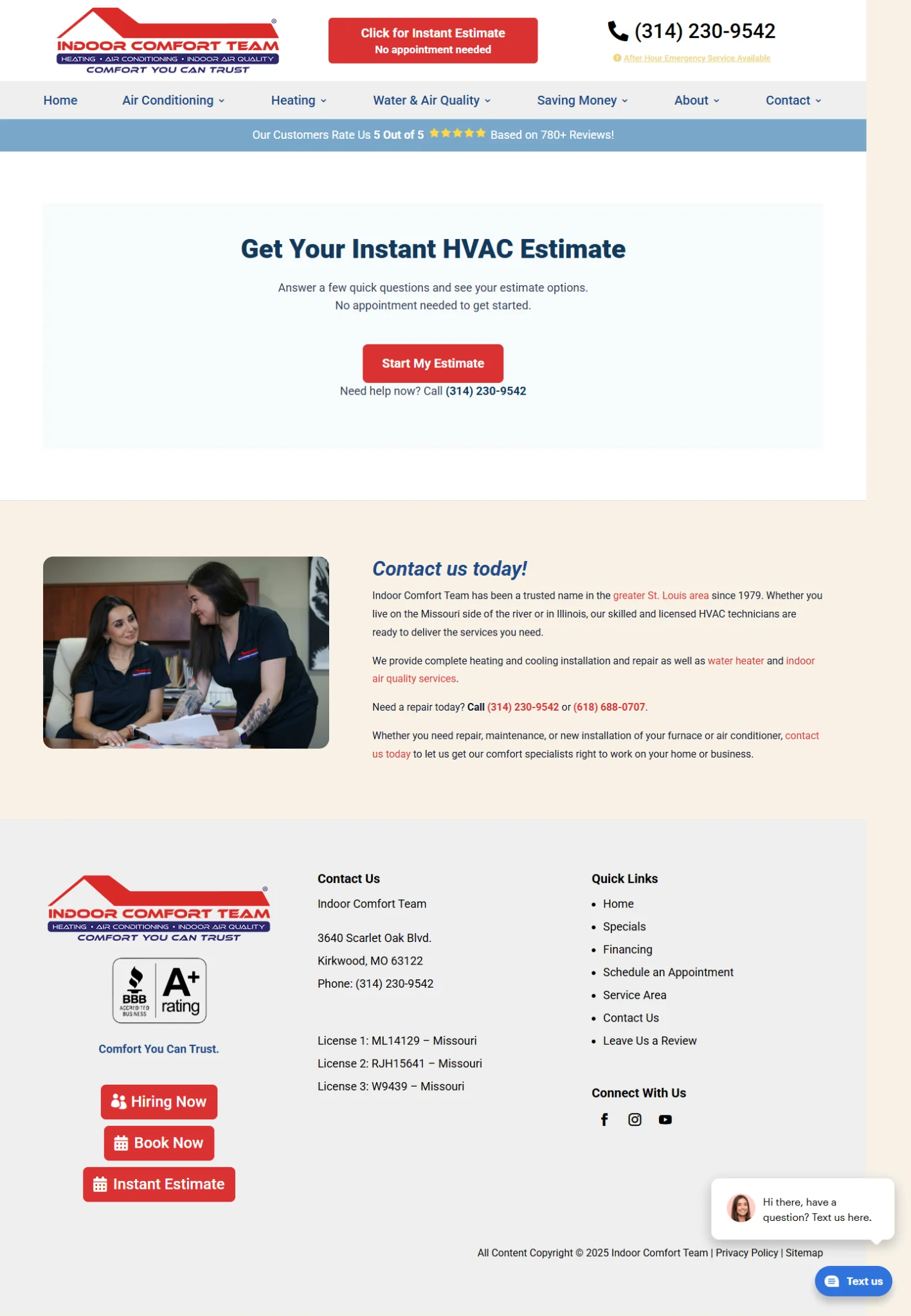
HVAC Estimator / Lead Intake System
Indoor Comfort Team HVAC Estimate Engine
Problem: A standard website form could not capture the HVAC-specific context needed before a useful estimate conversation.
Outcome: The finished estimator guides homeowners through contact capture, system configuration, estimate options, and submission confirmation before handoff.
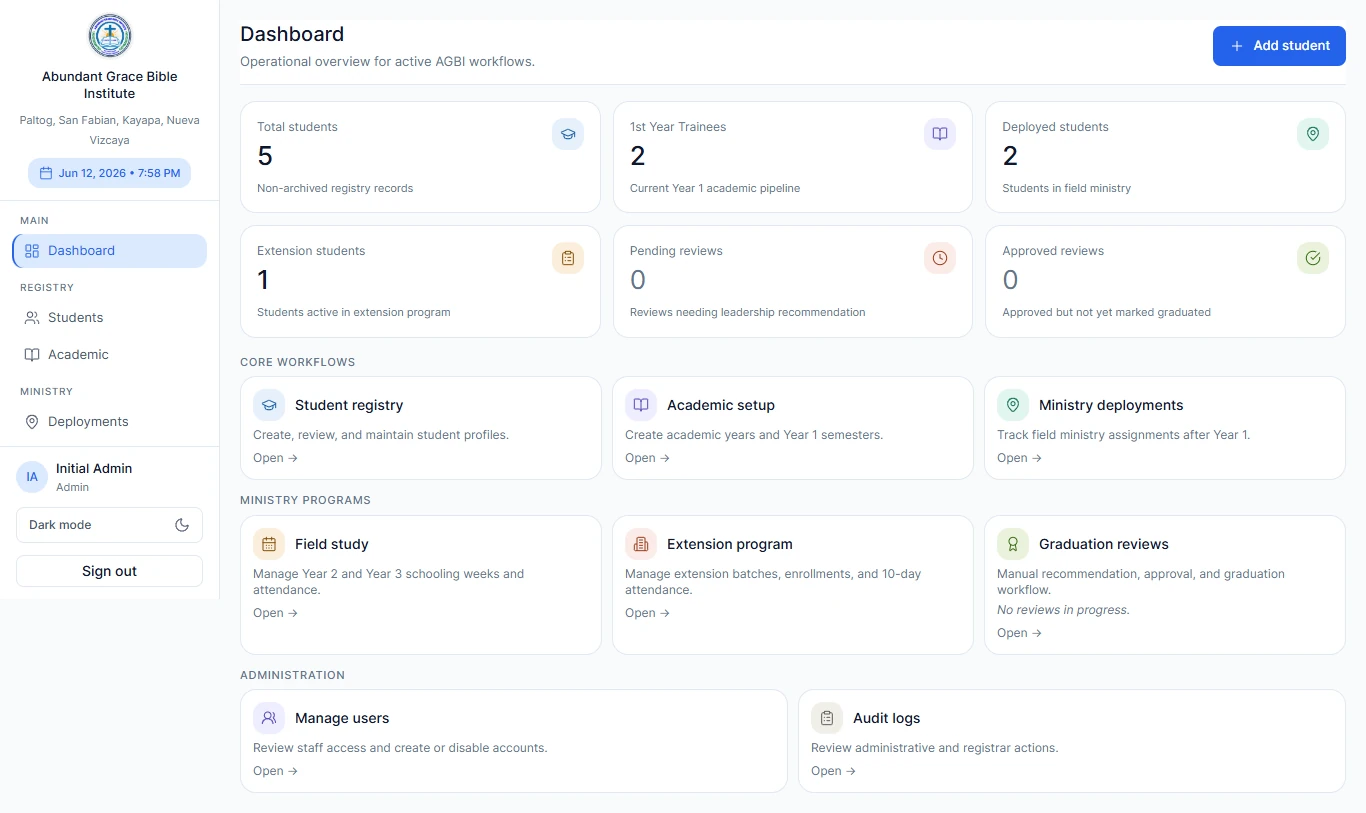
Internal Academic Operations System
AGBI Academic & Ministry Operations Portal
Problem: AGBI needed one structured system to manage academic records, ministry deployment, extension attendance, graduation review, and staff administration instead of relying on scattered manual records and disconnected workflows.
Outcome: Built a role-aware internal portal that centralizes student registry, academic setup, ministry workflows, graduation review, audit logs, and staff user management in one operational system.
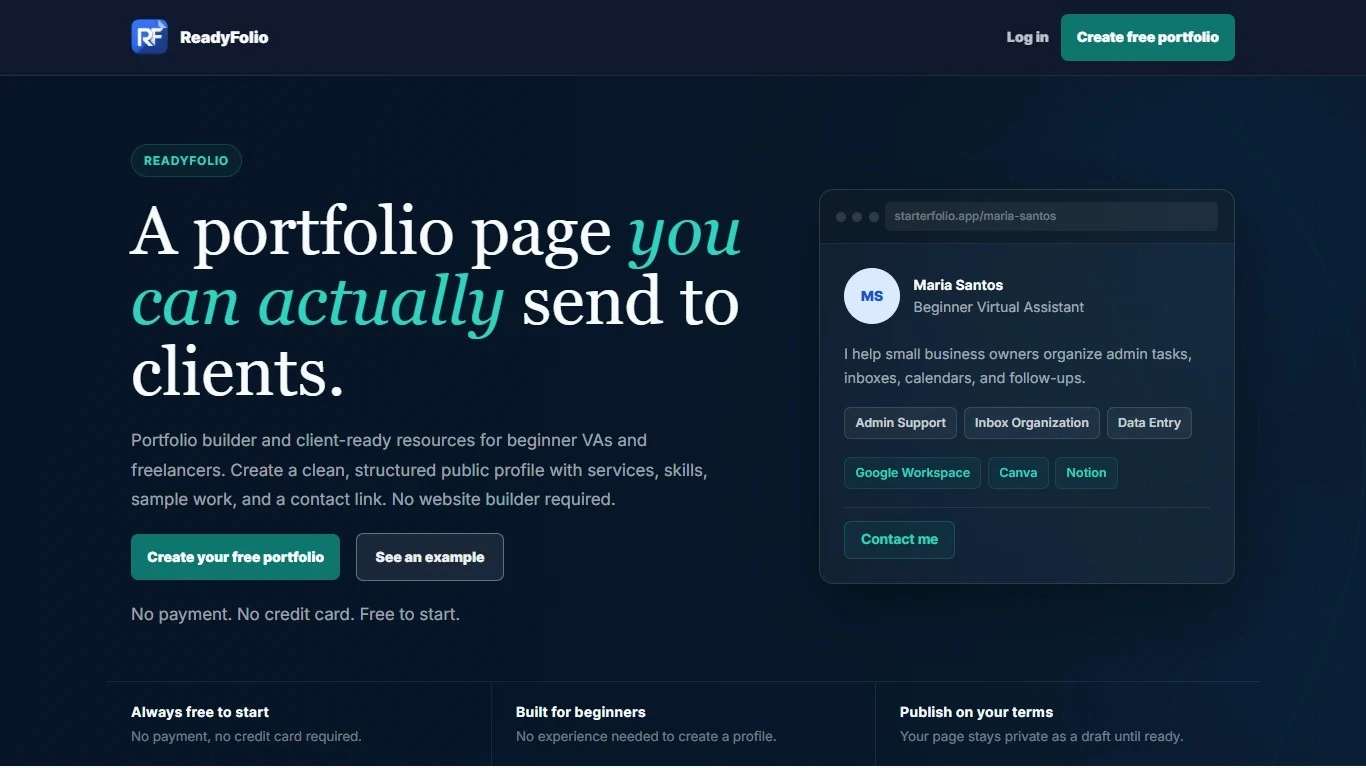
Resource Portal / Portfolio Builder
ReadyFolio Resource Portal
Problem: Beginner freelancers needed a structured place to build a simple public portfolio, access client-ready resources, and manage profile content without using a website builder or receiving scattered files manually.
Outcome: Created a centralized portal where users can build a client-ready portfolio, access practical resources, and where admins can manage resource files and download visibility from one place.
How It Works
A direct, scoped-first working model.
01
Discovery and workflow review
We look at how the business currently operates, who is involved, and where the main friction points are. A full spec is not required.
02
Scope and architecture
I recommend a practical first phase centered on the highest-value workflow, then define the structure needed to support it.
03
Build the core system first
The first version focuses on the most important operational problem so the system becomes useful before it grows wider.
04
Refine and expand
After the core system is in use, we review real usage and decide what to improve next based on actual friction.
Direct builder access
You work directly with the person designing and building the system, which keeps decisions fast and grounded in the actual technical tradeoffs.
Workflow-first scoping
Projects are scoped around the workflow problem first, not around unnecessary features that make the build larger without making it more useful.
The goal is to build something useful early, then improve it with real feedback.
FAQ
Questions before starting.
What kinds of projects are the best fit?
Internal systems, client portals, estimator flows, workflow automation, and software that improves handoffs, reporting, or lead quality. The common thread is a clear operational problem with a real friction point.
Do you build brochure websites or marketing pages?
No. The work is deliberately positioned around custom systems, client-facing workflow tools, and operational software. If a template solves the problem, I am not the right builder.
Can you improve an existing workflow instead of rebuilding everything?
Yes. Some projects need a rebuild, but others only need the weakest handoff, intake flow, or spreadsheet-heavy process replaced first. I prefer the smallest useful phase that creates real operational improvement.
Do I need a full specification to reach out?
No. If you can describe the current workflow, the people involved, and where the process is breaking down, that is usually enough to define a sensible first phase.
What happens after I contact you?
You get a practical reply with fit feedback, follow-up questions if needed, and direction on the first useful step. The early goal is to clarify the workflow problem, not force a giant scope.
Final CTA
Start with the workflow problem.
A polished specification is not required. Send the current workflow, where it breaks down, and what a successful first phase should improve. That is enough to start a useful conversation.